A creator writes prompts, rejects dozens of outputs, combines fragments, redraws a face, changes the lighting, rewrites the words, and edits the final composition. Is the finished piece protected? In the United States, the answer does not turn on a label such as “made with AI.” It turns on the human authorship that is actually present in the final work.
The U.S. Copyright Office’s current position is direct: copyright protects original expression created by a human author. Material generated entirely by an AI system is not protected merely because a person supplied prompts. At the same time, a larger work may still contain copyrightable human contributions—such as original writing, photography, illustration, selection, arrangement, or substantial modification—even when it also includes AI-generated material.
This article offers practical creative guidance, not legal advice. Rights can depend on the exact facts, the tool’s terms, and how a work was made and used.
Start with the final work, not the tool
It is tempting to ask whether a particular platform creates “copyrightable images.” That skips the central inquiry. The Copyright Office examines the expressive elements of the submitted work and asks which were determined by a human being.
A prompt can show intention, taste, and effort. But the Office’s 2025 report explains that, with current generally available systems, prompts alone usually do not provide enough human control over the resulting expressive details to make the output itself human-authored. The result may surprise even the person who requested it. That distance between instruction and final expression matters.
Using a tool does not erase authorship. But choosing a destination is not always the same as creating the expressive path that appears on the page.
Three situations creators should separate
1. The system generates the expressive content
If a person enters a prompt and accepts the resulting image, text, or music with no copyrightable human contribution, the AI-generated material itself is generally not protected by U.S. copyright. Time spent prompting does not automatically change that conclusion.
2. A human combines generated and authored elements
A creator may write original text, shoot original photographs, draw characters, and arrange those elements with generated material into a larger whole. Copyright may cover the person’s original contributions and, when sufficiently creative, the selection and arrangement—without extending to the AI-generated portions themselves.
3. A human meaningfully modifies generated material
Substantial human editing can add protectable expression. The threshold is case-specific: changing a file format or making a minor color correction is different from repainting forms, restructuring a composition, or rewriting passages through human creative choices. The claim is to what the person actually authored, not to the untouched output underneath.
What “human direction” looks like in practice
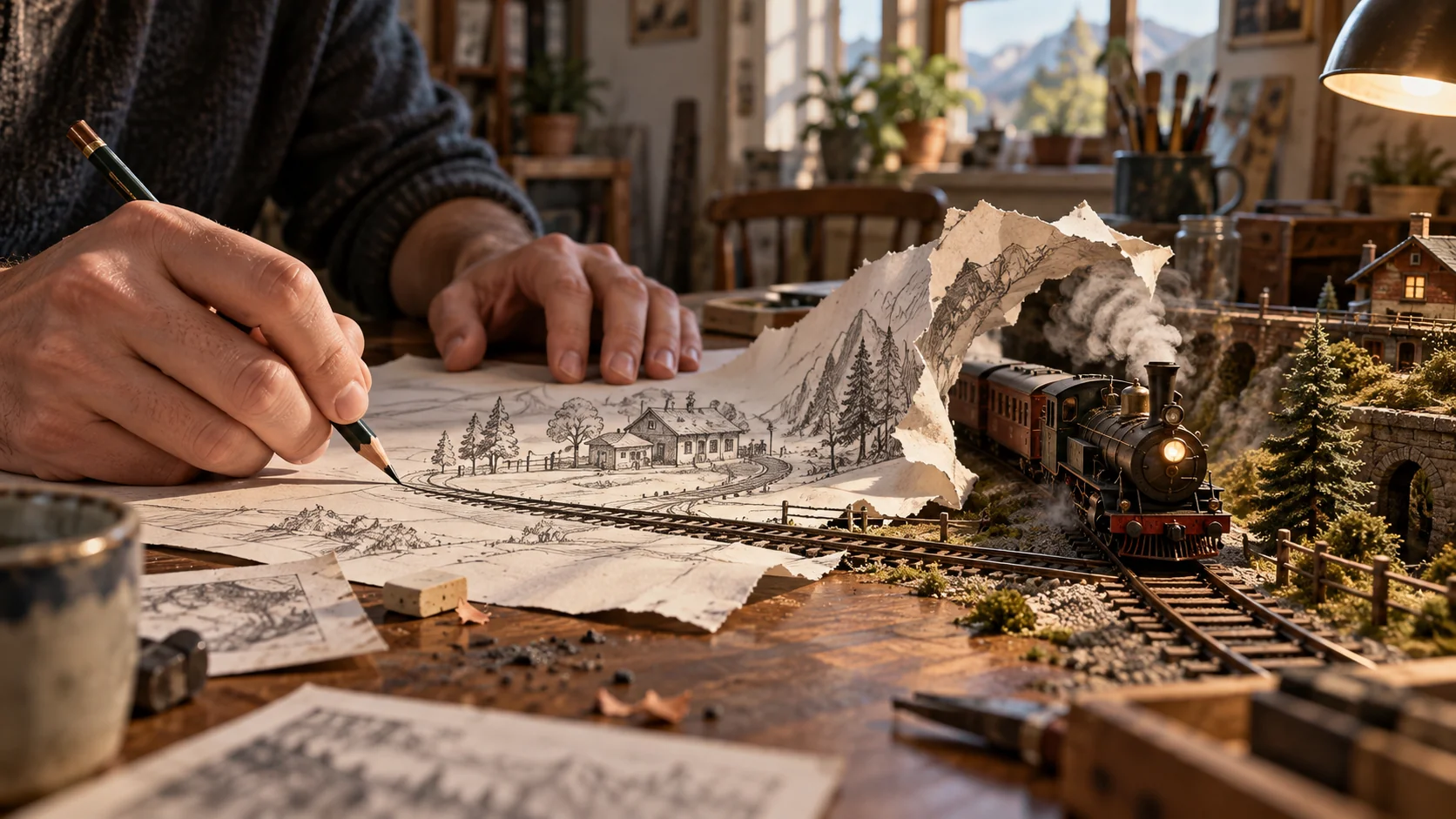
Creative control becomes easier to describe when it leaves evidence. For a book or CinemaBook, that evidence might include a written manuscript, thumbnails, page plans, character sheets, hand-drawn corrections, compositing layers, typography decisions, and successive edits. For a film, it may include the script, storyboard, performance direction, shot design, recorded material, and edit timeline.
None of these documents guarantees a particular legal outcome. They do something more practical: they distinguish a human-designed work from an unexplained final export. They show where judgment entered the process.
A responsible workflow for U.S. creators
Define the human contribution before production
Write down what you are creating: the story, visual system, characters, structure, camera logic, lyrics, arrangement, or edit. Treat AI as one component of the process, not as a substitute for naming the work’s authorship.
Keep a simple creation record
Save dated drafts, source files, sketches, reference sheets, edit histories, and notes about which elements came from which tool. You do not need to preserve every failed experiment. Preserve enough to reconstruct the meaningful decisions and the origin of important assets.
Read the platform terms
Copyright law and a service contract are not the same thing. A provider may grant or restrict certain uses, require attribution, or address responsibility for inputs and outputs. Those terms do not create federal copyright in material that lacks human authorship, but they may affect what you are permitted to do with the service.
Check inputs as carefully as outputs
Owning the final composition does not excuse unauthorized use of protected material, trademarks, a person’s likeness, or confidential information. Do not assume that a tool’s availability is permission to upload or imitate anything. Use material you created, licensed, or are otherwise allowed to use.
Disclose AI-generated material when registering
The Copyright Office instructs applicants to claim the human-authored material and exclude AI-generated material that is more than minimal. Its registration guidance provides examples of how to describe those limits. If a registration or dispute is important to the business, consult a qualified U.S. attorney about the specific work.
Authorship is different from disclosure and infringement
Several debates are often collapsed into one. Whether a final element is copyrightable is one question. Whether training or an output infringes someone else’s work is another. Whether a platform requires disclosure is a contractual question. Whether an audience deserves transparency may also be an editorial or ethical choice.
Keeping those questions separate leads to clearer decisions. A work may contain no protectable rights in one generated element while the human-written story and overall arrangement remain protected. A work may be copyrightable in part and still raise a separate issue about an input. “Copyrighted” is not a universal certificate that every step was lawful.
The creative standard is higher than “Can I claim it?”
Strong authorship is visible in the result: a point of view, a pattern of choices, and a form that could not be reduced to accepting the first plausible output. That does not require hiding the tool. It requires directing it.
At Manifesto Dream Studio, creative tools can accelerate exploration, but the human creator remains responsible for the story, references, selection, correction, continuity, and final meaning. That responsibility is not paperwork around creativity. It is part of the creative act itself.